LET ME START OFF BY SAYING something positive: In the past, I have adored Mike White’s body of work. I consider Freaks and Geeks, Enlightened, Year of the Dog, Chuck and Buck, as well as the first two seasons of The White Lotus to be subtle, edgy, funny, nuanced, and thought-provoking. But as the credits rolled on the finale of The White Lotus’s third season (streaming on Max), I said out loud to my TV screen, “Are you f-ing kidding me?” I am legitimately confused—to the point of anger—by this entire season. I’m left to conclude that this series may have jumped the monkey.
So many monkeys, so little meaning. They are in almost every cutaway, lurking, watching behind the scenes on the hotel grounds, occasionally howling. I get it: I felt the same way watching this group of insufferable people interact with each other for eight episodes. Do the monkeys represent humans’ base animal instincts that we pretend don’t exist and try to conceal with education and material success? Do they stand for the menace lurking underneath the surface of this luxurious Thai hotel? Or are they just there so that Rick Hatchett (Walton Goggins) can tell his girlfriend Chelsea (Aimee Lou Wood) after he confronts the person he thinks ruined his life, “I finally have the monkey off my back”—a season-long pun in the making? Who knows? To me they seem more like another animal: a red herring. A red herring in a sea full of red herrings that just swim in circles.
For being a whodunit, season three of The White Lotus is almost devoid of action. Every other scene has a main character staring deeply into the middle distance as portentous kettle drums and discordant background music swell to make sure the audience knows these characters are battling with difficult life choices. Unlike the haunting soundtracks in seasons one and two, season three’s is melodramatic and unearned, more appropriate for an episode of Survivor (a reality show in which Mike White participated) than a season of prestige television.
And when there is dialogue, it’s irritatingly obvious and expositional. “We are soulmates, we are tied together forever,” Chelsea says over and over to Rick. “I’m going to help you get your joy back, even if it kills me,” she says at another point. Guess how that will turn out for them in the end!
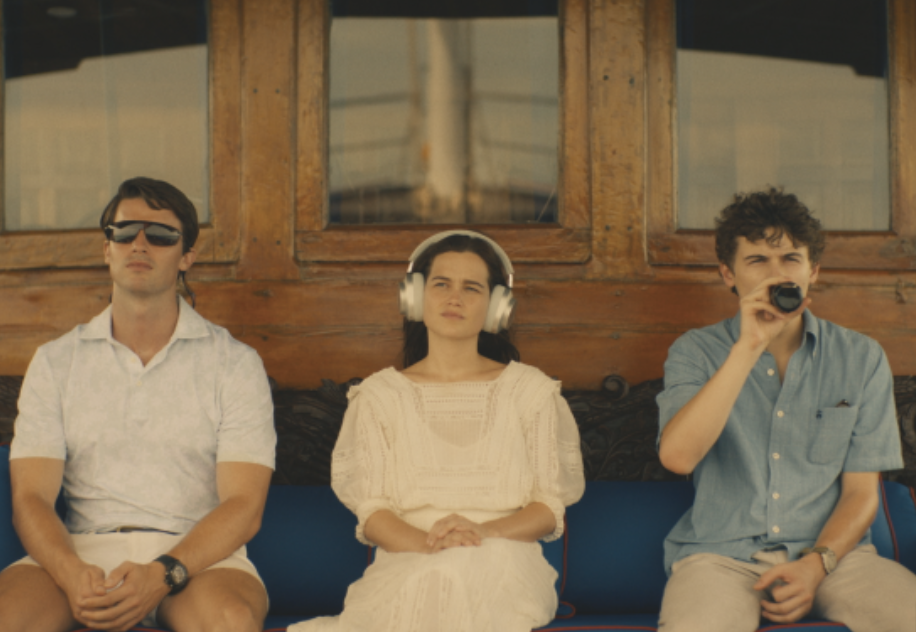
Timothy (Jason Isaacs), the paterfamilias of the noxious Ratliff family, exclaims to the hotel manager straight off the boat, “[My daughter] is a religious studies major, so she’s writing her thesis—what’s your thesis on, Piper?—well, it’s on Buddhism, and there’s a monk and a monastery near here, anyway, she wants to interview him, so we made a family road trip of it.” Okay, thanks for laying all that out for us so neatly.

WHAT IS THE MESSAGE Mike White wants to tell about this particular hotel in this particular place? I honestly don’t know. What happens here could happen anywhere, and Thailand seems beside the point. In previous seasons, the locale was an implicit and explicit part of the story. The first season took place in Hawaii, where we felt the culture clash between native Hawaiians and the rich American tourists who disrespect their culture and use the island to suit their own pleasures. Sicily was the setting for season two, where the luxury of Taormina is a paper-thin veneer of civility over the seductive and perhaps sinister nature of that capricious island. The rich Americans vacationing there are seduced and abandoned, duped and unsettled by Sicilians, who take advantage of their guests’ naïveté and arrogance. And they reject the American notion of reconnecting with the mother country as a sort of reverse colonialism.
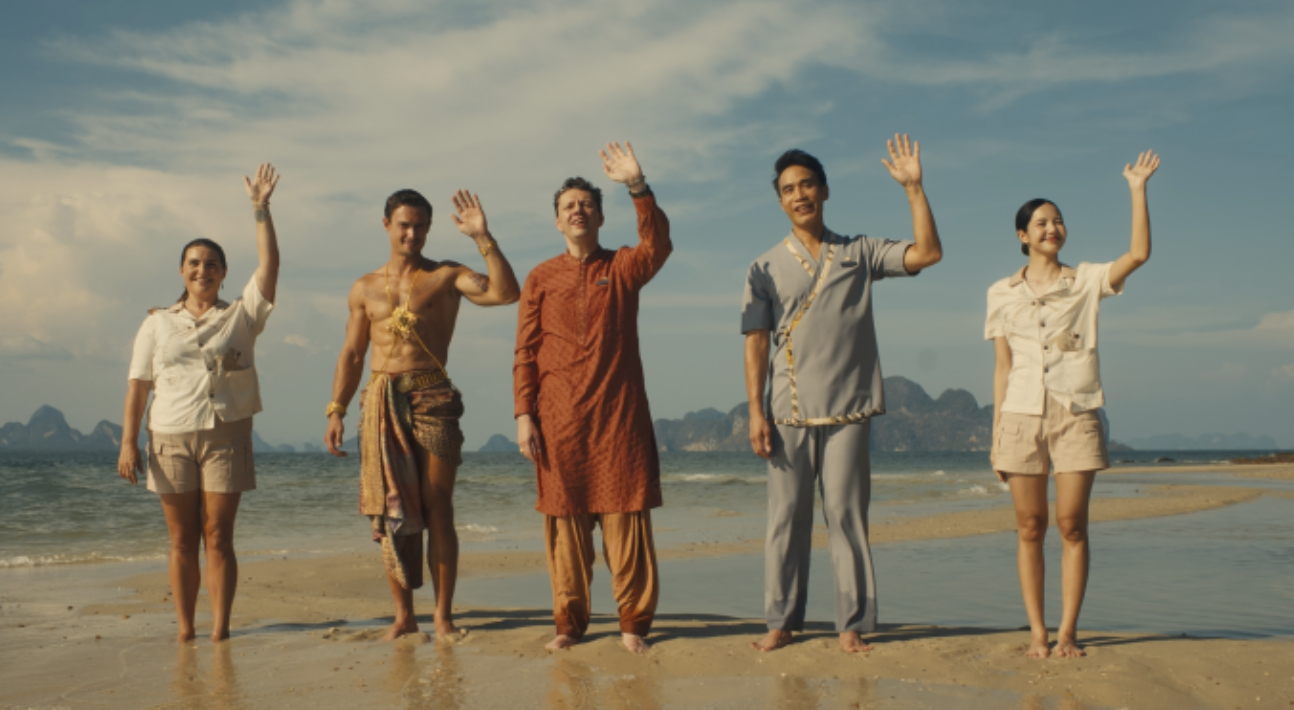
But aside from sumptuous shots of nature and the endless monkey cutaways, season three neglects Thailand’s allure and traditions. Rather than lush, mysterious, and spiritual, its setting feels claustrophobic. We rarely leave the grounds of the hotel. And when the characters do, what they experience of Thai culture is generic. The Thai actors themselves seem like placeholders instead of fully realized individuals. As the audience, we have no idea how the staff feels about their guests.
Fabian tells Rick and Chelsea that the wellness program at the White Lotus is “the best in the world,” and then aside from some therapy, massage, and yoga sessions, that idea goes by the wayside. What could have been a compelling examination of the wellness industry—its hopes and hypocrisies, the virtues and vices of its denizens—becomes another missed opportunity. Yes, we do get a brief glimpse of life in a Thai monastery, but the dialectical tension between spirituality and materialism is handled like a freshman 101 class in Buddhism. From the creator of Enlightenment, the lack of spiritual depth is one of the most mysterious and annoying aspects of this season of The White Lotus.
And this season’s nihilism is the other big frustration. I appreciate Mike White’s dark humor, irony, and even cynicism, and I never expect neat, happy endings from him—but I do expect complexity, compassion, and humanity. Season three’s casual cruelty caught me off guard. Carrie Coon’s character is put through the emotional wringer and is made to apologize and vaguely grovel to her two frenemies who treated her quite badly. Timothy almost poisons his entire family, yet one scene later he is on the departing boat, composed and recovered. Gaitok, the thoughtful, virtuous security guard goes against his gentle nature and chooses violence to advance in his career, thereby winning the hand of the superficial girl he pines for. Belinda (Natasha Rothwell), whose pain we felt viscerally in season one when Tanya dropped her as a business partner in the wellness practice they planned together, does the exact same thing to her Thai lover in season three, except he just accepts it with a warm smile as she leaves to go back to Hawaii, a new multimillionaire. We believed Belinda to have a spiritual and moral core, but psych! By Belinda taking Greg/Gary’s $5 million in hush money, Mike White apparently proves us wrong.
Yes, there are some very funny and cogent moments this season (as a Tar Heel, I certainly do appreciate all the explicit Duke hatred), but Mike White ultimately plays us for fools and suckers, and to me, this feels reductive and cheap for such a talented creator. He kind of dares us to loathe almost everyone, which I suppose is bold in its way, but I find it to be more contrary than clever in its execution. Few of the characters have significant emotional journeys, and we as an audience discover very little about them. It’s fitting that the song playing over the closing credits is Billy Preston’s “Nothing From Nothing (Leaves Nothing).” As an admirer, I just expect more from Mike White than a sour taste left in my mouth.